
 E-Paper



GST Council meet: Biometric authentication among 10 big announcements by FM Nirmala Sitharaman
Sitharaman also announced that the GST Council recommended extending the time limit to furnish details and the returns in form GSTR 4 from April 30 to June 30

 Prefer HTon Google


Finance minister Nirmala Sitharaman on Saturday announced biometric-based Aadhaar authentication to check fake invoicing.
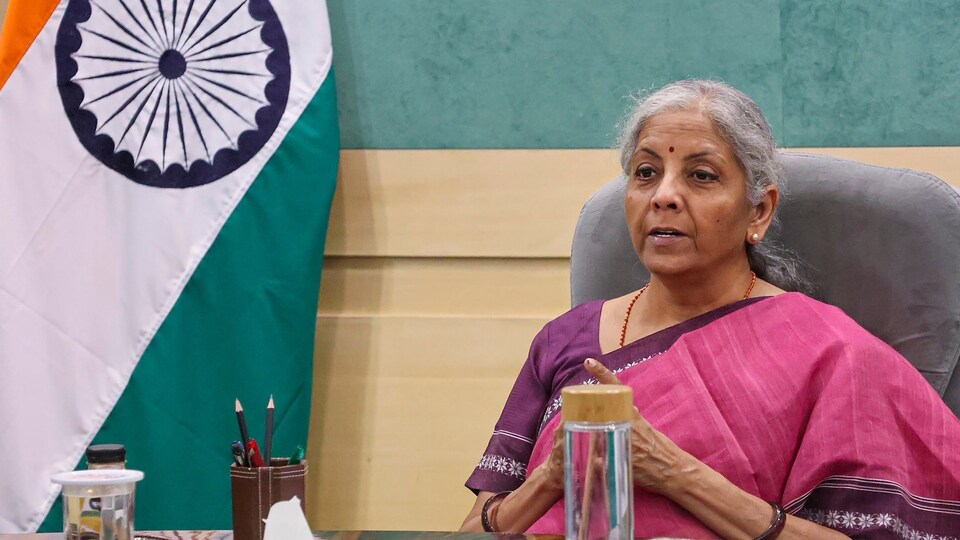
“There is going to be a rolling out of biometric-based Aadhaar authentication on an all-India basis. This will help us to combat fraudulent input tax credit claims made through fake invoices in the cases,” the minister announced at the briefing after the 53rd GST Council meet.
Here are other top announcements made by the finance minister after the GST Council meeting.
1. Sitharaman also announced that the GST Council had recommended extending the time limit for small taxpayers to submit their returns from April 30 to June 30.
ALSO READ: India mulls Budget tax cuts as part of $6 billion consumer boost
2. “In order to help small taxpayers, the Council recommended extending the time limit to furnish the detail and the returns in the form GSTR 4 from 30th April, the council has recommended that it be extended to 30th June. This will apply for returns for the Financial Year 2024- 25 onwards,” the minister added.
3. The finance minister announced that the GST Council had recommended waiving interest and penalties for demand notices issued under Section 73 of the GST Act including cases not involving fraud, suppression or misstatements.
ALSO READ: Budget 2024: Nirmala Sitharaman to increase income tax exemption limit?
4. “Services provided by Indian Railways like platform tickets exempted from GST,” the finance minister said.
5. “Today, the 53rd GST Council Meeting has taken a lot of decisions on trade facilitation, easing compliance burden and giving relief to tax taxpayers in terms of compliance easing out. So this will benefit the traders, MSMEs and taxpayers,” Sitharaman said at a briefing after the 53rd GST Council meeting.
6. “Today, the GST Council recommended waiving interest and penalties for demand notices that have been issued under Section 73 of the GST Act including cases not involving fraud, suppression or misstatements,” the minister added.
7. “For all those notices which were issued under Section 73 for the Fiscal Years 2017-18, 2018-19 and 2019-20, the Council has recommended waiving interest and penalties on the demand notices which have been served,” Sitharaman said.
8. “The time limit to avail input tax credit in respect of any invoice or debit note under section 16(4) of the CGST Act filed up to the 30-11-2021 for the financial years 17-18, 18-19, 19-20 and 20-21 may be deemed to be 2011 to 2021. So for the same requisite amendment retrospectively with effect from 1 July 2017, the council has made a recommendation," Sitharaman said.
9. The finance minister further announced that the GST Council recommended monetary limits for filing appeals by the department in various courts. “In order to reduce government litigation, the council has recommended a monetary limit of ₹20 lakh for GST appellate tribunal, ₹1 crore for High Court and ₹2 crore for Supreme Court for filing of appeals by the department,” she said.
10. The minister added,“The Council has also recommended that the maximum amount for pre-deposit for filing appeal before the appellate authority shall be reduced from ₹25 crores CGST and 25 crores SGST to ₹20 crore CGST and ₹20 SGST and that is the maximum amount of pre-deposit for filing appeals before the appellate authority."
“Council has also decided and recommended that amending the provisions of CGST act to provide that the three month period for filing appeals in the GST appellate tribunal will start from a day which shall be notified by the government. So the president of the tribunal has assumed office and the said period for filing tax filing appealed by the taxpayers will expire on 5 August 2024,” Sitharaman added further.
(With agency inputs)


